
During winter, when temperatures drop below freezing, water pipes and water heaters can freeze, which may cause:
No hot water
Burst pipes and water leaks
Unexpected repair costs
To avoid these problems, please follow the tips below.
🔧 Why Do Pipes Freeze?
Water begins to freeze at 0°C (32°F).
When outdoor temperatures drop, water inside exposed pipes or water heaters can freeze, expand, and damage the pipes.
📌 Basic Freeze Prevention Tips
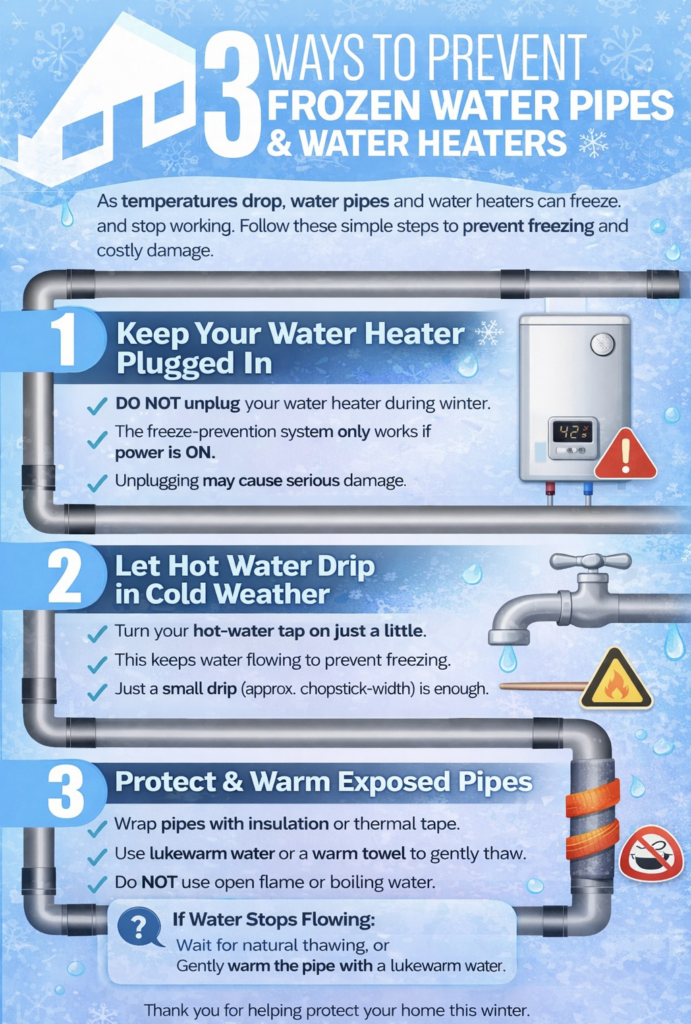
✅ Do NOT unplug the water heater
Please keep the power plug connected during winter.
Most water heaters are equipped with automatic freeze-prevention heaters or circulation systems, which only work when the power is on.
✅ Let water run slightly at night
On very cold nights or when freezing temperatures are expected:
Open the hot-water tap slightly (about the width of a chopstick / approx. 4 mm)
This keeps water moving and helps prevent freezing
💡 You can collect the running water in a bucket or bathtub to avoid wasting water.
🧤 Protect Exposed Pipes
For outdoor or exposed pipes:
Wrap pipes with insulation material or thermal tape
Cover pipes to protect them from cold wind
These simple measures are very effective in preventing freezing.
🔎 What to Do If Pipes Freeze
If water stops flowing:
Wait for natural thawing, or
Gently warm the pipe with a warm towel or lukewarm water
⚠️ Do NOT use boiling water or open flames, as sudden heat may damage or burst the pipes.
📝 Quick Winter Checklist
✔ Keep the water heater plugged in
✔ Let hot water run slightly on cold nights
✔ Insulate exposed pipes
✔ Prepare early when cold weather is forecast